Friday, 27 February 2009

Climate change debate from Plenary Wednesday 25th


Leanne Wood: As we are all aware, plans for a significant new power station have been approved for Milford Haven without there being a requirement for it to include a combined heat and power capability. That means that a huge amount of the heat that will be generated by the plant, which could have been piped into local homes and businesses, will be wastefully pumped into the air. I understand that the responsibility for consenting to the new power station lies with the Westminster Government, but it contradicts and undermines your efforts to cut carbon emissions in Wales as Assembly Minister for the environment. Do you agree that it is disappointing that the opportunity to use the heat has been missed, and do you share my concerns about the difficulty of getting people to change their behaviour and reduce their individual carbon emissions when the UK Government makes decisions such as that?


Jane Davidson: It is true to say that the Assembly Government’s policy is to have combined heat and power outcomes on any new power station. However, it is not fair to say that there is no combined heat and power capability in the proposal because one of its conditions is that it can be introduced if a client is found. Therefore, it is imperative that we, as the Assembly Government, see whether we can find a client.

Wednesday, 25 February 2009

Employment discussion from yesterday's Plenary debate

Here is the transcript of my contribution to the Employment Opportunities in Wales debate from Plenary yesterday and the First Minister's response.

Leanne Wood: I am sure that you will agree that public sector jobs are the most secure, particularly in the current economic climate. A new public-private partnership unit has been established, and I am concerned that this development could lead to more private sector involvement in public services in Wales. Are you concerned that the potential expansion of PPP in Wales is potentially dangerous, particularly in terms of the security of public sector jobs? Furthermore, would you be prepared to give an undertaking that people who are currently working in the public sector in Wales will not be transferred to the private sector as a result of work undertaken by the new public-private partnership unit?

The First Minister: That is not the purpose of the public-private partnership unit. It has been set up to ensure that where you have a public-private partnership, as with energy from waste or anaerobic digester schemes, where a consortium of local authorities will apply to us for a lot of assistance to support the scheme, that consortium of five, six, 10 or however many local authorities and us as the Government, from whom they are requesting major capital subsidy and sometimes a revenue subsidy over 20 years, are not taken to the cleaners by bidders coming in from the private sector. It may be a bit of a one-off for us but those bidders may have dealt with 20 such schemes, so they will know more about it than we do. We want to ensure that we are an intelligent customer, balancing out the relationship between the private provider and the public sector commissioner.

Friday, 20 February 2009

More from the Western Mail

This time the letters page:

SIR – In response to suggestions that Plaid Cymru has changed its long-held position of opposition to nuclear power in Wales, we write to clarify the situation. At Plaid Cymru’s 2007 conference the party membership passed a motion reiterating the party’s “total opposition to the construction of any new nuclear power stations in Wales”. Our principles are clear. Wales should decide whether a new nuclear power station comes to Wales. But this decision will be taken in London. If we had the powers to make these decision in Wales, a new Wylfa would not be built. Of the four main parties that represent the people in the National Assembly, three have declared their opposition to nuclear energy in Wales. We’re proud to say that Plaid is one of those parties. Wales is already a net exporter of electricity, so this power station is not about meeting our energy needs.

However, it is fair to say that Ynys Môn has specific economic problems which must be addressed. That is why we believe that there are vast opportunities for green-collar jobs which could be realised there, and across Wales, via an Obama-style green new deal. There is an urgent need to vastly expand renewable energy from marine, solar and wind sources, small-scale and large. Why not invest in jobs in these technologies to regenerate Ynys Mon?

Nuclear power stations produce the most toxic waste known to us and it could be around for thousands of years. Producing this waste risks jeopardising the safety of future generations.
A key principle s one of accountability. Support for a new nuclear power station must also mean support for the creation of a new nuclear waste site in Wales. If we are not prepared to bury that waste in the bottom of our garden, we should not be prepared to send it to anyone else’s.

Does Wales want this legacy? Plaid Cymru thinks not.

JOHN DIXON, Plaid Cymru’s National Chair,
LEANNE WOOD AM, Plaid Cymru’s Environment Spokesperson

Thursday, 19 February 2009

In today's Western Mail


From today's Mail:

'Wales should get a windfall if the Government has to provide extra funding to English PFI projects, a Plaid AM has claimed.'


'Plaid Cymru AM Leanne Wood yesterday said private finance initiatives had “clearly failed”. Her criticism of the use of private sector finance comes as speculation mounts that the Westminster Government may have to provide £4bn in loans to rescue contractors which can no longer raise money from the markets.The Treasury yesterday confirmed it will be coming forward with a set of proposals on PFI in the coming days.'


'The Labour-Plaid Cymru coalition pact commits the Assembly Government to eliminating the use of private hospitals by the NHS by 2011 and use of PFIs by the health service is banned.Ms Wood said: “One good thing coming out of Wales’ very limited use of PFI in the past is that we will not have chunks of our budget tied to PFI repayments over the coming decades.” '


'Conservative AM David Melding said: “PFI...remains a very robust option for capital projects but it’s also a model much more likely to be popular during times of robust economic growth.”The present shortage of funds was not due to errors by the contractors, but due to actions by banks, he said.A Welsh Assembly Government spokesperson said: “We are in regular dialogue with the Treasury to ensure that the Welsh Assembly Government receives funding in accordance with the operation of the Barnett formula.” '

Friday, 13 February 2009

Do we have to accept a £500m budget cut?

According to news reports Wales could face budget cuts of 'up to £500m' next year. The reason - the bank-bailouts have to be paid for, and so public spending across the UK is expected to be squeezed.

The fallout from the inadequate local government and further education funding settlements was bad enough. 2010 and beyond will be a nightmare. The public sector provides more jobs pro rata in Wales than it does in other parts of the UK and so these cuts will have a bigger impact here. They'll destroy attempts to raise the GDP of the EU's Objective 1 area, West Wales and the Valleys.

The financial crisis has led Governments across the world to rewrite the rules of capitalism, contradicting the economic doctrine that they have been fighting wars over for the past fifty years. Isn't it now time for the rules to be rewritten in favour of working people? Shouldn't jobs should be the top priority? Large-scale long-term unemployment causes deep social problems which can last well into any recovery period, as many of our former mining communities know only too well. Public sector jobs are the easiest ones for the government to save. We simply can't take these cuts lying down.

Mark Serwotka of the PCS Union has said that we need a united front of politicians and trades unions, to challenge Gordon Brown. What is needed is an emergency rescue deal for the public sector. Or will the bankers continue to be the UK government's top priority?

Thursday, 12 February 2009

From the Record

Leanne Wood: What discussions has the Minister had regarding private finance initiative projects in Wales?

The Minister for Finance and Public Service Delivery (Andrew Davies): I have had none specifically on PFI projects, but I have had a number of discussions with my Cabinet colleagues, the Wales Trades Union Congress and others about making use of innovative funding approaches in Wales to complement our existing resources, as well as improving our technical expertise in a manner that is consistent with our existing policy.

Leanne Wood: Can you tell us what the thinking was behind the establishment of a new public-private partnership unit, five years after your predecessor, Sue Essex, wound up a similar unit? Do you agree that, at a time when the private sector has become dependent on state handouts, due in large part to its own recklessness and greed, Welsh public services would be exposed to unacceptable risk if anything were done to make them more dependent on private capital now? Furthermore, will you give an assurance that no existing public sector staff will be transferred, under any partnership deal, to either a private or a third sector organisation?

Andrew Davies: I want to make it absolutely clear that there is no change to our existing policy. However, as the Minister with responsibility for finance, I am determined that we will make the maximum and most effective use of our resources, particularly our capital resources. As we know as a result of the recent pre-budget report, it is a possibility that our capital allocation will be reduced substantially. Therefore, it is even more important that we make the maximum use of our resources. The public sector generally, across the UK, has not been good at using capital. In many cases, we do not have the skills and expertise required to make the best use of our capital expenditure, and there is a whole range of programmes, information communications and technology projects, and e-government and other projects where the public sector does not have the skills and expertise required. The idea behind setting up the partnership Wales unit, as I have called the public-private partnership unit, is to ensure that we have that expertise, and are able to deal with the private sector and other public sector bodies in a realistic way, ensuring that we make the maximum use of our resources. To recap, we have not changed our policy; however, it is about making the maximum use of the resources that may be at our disposal.

Monday, 9 February 2009

Wales - 13th Worst Carbon Dioxide Emitting Country in the World


Leaving aside that the "report" is one of a series of regular research briefings prepared by the Assembly's Research Unit to update AMs on the latest available data on climate change, this article makes some serious points.

Climate change is fast turning into a climate crisis. We are already witnessing melting ice caps, rising sea levels, more natural disasters such as floods, droughts and storms, unreliable and shifting agricultural patterns, the loss of wildlife and species extinction and the destruction of sea life habitats. Today we are watching the tragic consequences unfold from the fires in Australia. Very few serious people are now denying what professor Sir David King, Chief Scientific Adviser to the UK Government called back in 2004 "the biggest problem facing us globally this century. There is no bigger problem. The threat is quite simple; it's a threat to our civilisation."

Gordon James from Friends of the Earth is right when he says “The abundant political rhetoric we have had on the subject must be replaced by courageous action that will bring about big reductions in emissions in the very near future. Last week’s decision to give the go-ahead to a large power station at Pembroke instead of the far more efficient combined heat and power systems just shows how politicians are still delivering business as usual responses rather than the radical policy changes that are now essential.”

The story is taken up in the Western Mail editorial which says "Decisions like approving a huge opencast mine at Merthyr Tydfil and a gas-fired power station at Pembroke, which does not conform to the highest possible environmental standards, suggest the political commitment to combating climate change is no more than skin deep. It is no wonder that members of the public are confused by the very apparent mixed messages they are being fed."

The Assembly had no say over the LNG power station in Pembrokeshire. Recognising this lack of power as a major barrier to progress on cutting Welsh carbon dioxide emissions, the editorial goes on to argue for the Assembly to "have planning control over the biggest power station applications – the very plants that have the greatest impact on climate change." Of course, I agree that this would be a good step, but we've still got a long way to go before we resolve the jobs versus environment arguement in a way which doesn't involve building more and more massive polluters.

Bonuses for Bankers


Bankers in government-bailed out banks are set to get £1billion in bonuses this year, with government approval. UK Financial Investments Ltd (UKFI) are a group of bankers recruited by the Treasury to manage the public's stake in the banks. UKFI are set to approve the proposals for this year's bonuses.

"Sources close to UKFI defended the proposed incentive payments. “If these guys sell RBS at a large profit for the taxpayer in a couple of years, who’s going to begrudge them a bonus?” said one."


In most jobs, any bonuses are paid by results. Why are bankers different? Although there has been the promise of a 'review' of bankers' bonuses, it's not due to report until the Uutumn at the earliest. That will be too late to deal with this year's round.

I cannot see any reason for not taking the banks into full public ownership. That way, the government would be in a position to not only ensure that bankers' bonuses are capped or even scrapped, but they would also be able to see the books. No-one knows how much toxic debts the banks have. The first bail out didn't shift credit so now there are attempts to make it happen through a second, insurance-based bail out. While it may not hurt the public purse now, it is highly likely it will in the future. If the people pay so much for them, why can't we own them? Then, if the likes of RBS do make large profits in a few years, the public purse will see the fruits of its "risk".

Sunday, 8 February 2009

Llongyfarchiadau i Bolivia


Bolivians have endorsed a new constitution that will "enshrine indigenous rights and end centuries of oppression." Supported in a referendum by 61% of voters, the new constitution grants rights to territory, language and "community justice" to 36 previously marginalised groups. Evo Morales, Bolivia's first indigenous President was elected in 2006. A former coca farmer, Morales won his support from the majority of oppressed indigenous peoples on a socialist platform, pledging to grant them rights and to return Bolivia's natural resources (gas) to the people. Opposition to the changes came mainly from the wealthy regions of Santa Cruz, Tarija, Beni and Pando which are fertile lowlands holding rich gas deposits, and are farmed extensively by predominantly white or mixed race Bolivians, who have held power since colonial times at the expense of the indigenous peoples.

Morales's aim is to "re-found Bolivia," South America's poorest country, and to end a political and social order inherited from Spanish colonial times. "This is the second independence, the true liberation of Bolivia," Morales said upon signing the charter. Having survived numerous attempts on his life since his election, he told his opponents, "You can take me from the presidential palace, you can kill me, (but) the mission has been accomplished for the refounding of Bolivia" Good stuff.

Saturday, 7 February 2009

'Growing' Concern for Allotments


GARDENERS wanting to grow their own food face a wait of up to NINE years for a plot on a council allotment site in Wales. I have carried out a national survey of local authorities in Wales to find out how they are responding to the growing demand for allotments.


A total of 2,750 people are on the waiting list at the fourteen local authorities that supplied complete data. Some councils are looking to provide more land, but other local authorities have said that they have no plans to release more land for food growing.


Even more troubling is the revelation that many people face waits of several years to get one. The longest waits are in Monmouthshire, where there are just two local authority sites and 86 people queuing for a plot, with a waiting time of between three and nine years.


I’ve spoken to allotment holders and people on waiting lists all over Wales. Councils are supposed to provide enough allotment land, yet these figures show that most are not. Local food growing has so many benefits - people get good exercise, good quality cheap food and it enables us to stay in close contact with nature, which has proven benefits in terms of mental health. The climate crisis adds further impetus to expand local food growing projects. Plaid has campaigned for more growing land for our communities for some time, and these figures show the need to continue that campaign.


I am calling for the Welsh Government to put together and fund a national strategy for local food. A good start would be a dedicated member of staff in each local authority who could co-ordinate local food growing and organise community gardening projects. We could then promote allotment gardening and expand the opportunities to teach young people how to produce food and work with the land.

Thursday, 5 February 2009

Statement on the Oil Refinery Protests


I am sure that Plaid members and supporters are concerned with the industrial unrest across Wales and the UK over the past week. I have prepared a statement on behalf of Undeb, our trade union section, explaining our position.

It is inevitable that in the current economic climate, workers will seek to express their grievances through protest. Plaid supports the right to protest and the right to organise in trade unions. We are proud of our growing links with the trade union movement, and have campaigned in the recent past to support industrial action by the fire fighters, local government workers and civil servants. We recognise that the demonstrations and solidarity strikes that have spread across the UK and Ireland are not sanctioned by any union and are in defiance of anti-union laws laid down by Thatcher. Categorically, the protestors are not protesting against the principle of foreign labour being used in Wales or the UK. Rather, the demonstrations are calling for labour to be sourced locally where possible due to the rising unemployment levels. Undeb sympathises with these demands although we do not agree with the slogans that have been used.

The discontent felt among the workers involved in the Oil Refinery dispute is genuine, and action has not been taken lightly. In South Wales a support action involving 50 workers took place at Aberthaw Power Station. The strikes and protests were spontaneous. However, Undeb is concerned that the slogan of ‘British jobs for British workers’ does not represent the best way to resolve this dispute, particularly as the jobs in question are linked to IREM, an Italian company.

Undeb lays the blame for this message at the feet of Gordon Brown. He irresponsibly promoted this slogan at a time when he must have known he could not deliver it. His promotion of ‘Britishness’ has helped create conditions in which non-British workers could be excluded from showing solidarity with other workers in disputes over pay and conditions. Undeb believes the Labour Party has undermined the trade unions by dividing workers against each other on the basis of nationality. In the coming months and years there will be further disputes, and because of Brown’s ‘Britishness’ mantra it will now be difficult to unite workers of varying nationalities even if they are campaigning for the same demands . Plaid has a history of campaigning with every section of the community for social justice and represents the interests of all people in Wales regardless of nationality, origin or ethnicity.

Undeb also believes that the strikes have been misrepresented and workers’ demands inaccurately portrayed. Demonstrators at Aberthaw made it clear that they were not protesting against foreign labour, and that they work alongside Polish staff in a friendly manner every day. We are proud of the internationalism of the people of Wales and support the free movement of people in the EU. We also opposed the anti-trade union laws which mean our workers are far easier to exploit than in other EU member states. We will support any progressive demands for changes at the UK-level or EU-level to Employment or Trade Union legislation that might emerge as a result of these protests, including making sure migrant workers are unionised as the Lindsey Refinery Strike Committee has suggested. Those kinds of demands do not suggest anything near racism or xenophobia.

A deal has now been reached at the refinery where the dispute began. The company has agreed to offer new jobs on the project at UK conditions and rates of pay. No migrant workers will lose their positions. This is a positive outcome but this dispute could surface again in Wales as we have a number of energy-related construction projects planned in the future.

The real basis of this dispute is not nationality but rests with the actions of Gordon Brown and previous Labour and Tory Governments in building a purely market economy rather than a balanced, moral economy.

Leanne Wood AM

Wednesday, 4 February 2009

Minimum wage avoidance in Wales


I complained to the Information Commissioner after HMRC refused to provide information under the Freedom of Information Act. I asked for the locations of employers in Wales who were failing to pay the minimum wage. I've already blogged on previous investigations into minimum wage avoidance in Wales.

HMRC have now indicated that they have reconsidered their position. I have a summary of businesses breaking the minimum wage in the post-code areas covering Wales. According to HMRC between 2002-03 and 2007-08, 294 employers in the Cardiff postcode area were found not to be paying the minimum wage. In the Swansea postcode area it was 206, Newport 112 and Llandudno 81.

HMRC's U-turn is to be welcomed, but the information provided is still not detailed enough. Dodgy firms failing to pay their employees the minimum wage should be named and shamed. They are undercutting honest employers and exploiting workers - firms who comply with the law will want to see action taken. There have been no prosecutions in Wales for minimum wage avoidance, these companies have effectively got away with it! I can't understand the reluctance of the Westminster Government to prosecute companies who break the law or to make the details public. If naming and shaming is good enough for young people, why is it not good enough for criminal companies?

Tuesday, 3 February 2009

Welsh language legislation- where should it be decided?


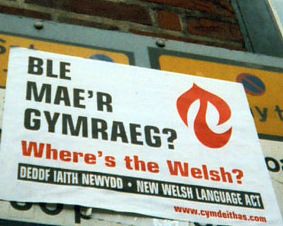
The bid for the Welsh language LCO has gone public. It's an historic occasion which I am hoping will is the start of the process of bringing powers over the language home to Wales. The simple point is that legislation to protect the future of the Welsh language should be made in Wales. This is the most democratic and practical way of making laws which will enhance our status as a bilingual nation, and which will establish linguistic rights for Welsh speakers, placing both of our national languages on an equal footing.

If all goes well, the actual detail of the legislation will be debated in our National Assembly once we get the powers transferred. I am looking forward to that moment.

I've just been informed that I'll be on the Assembly legislation committee responsible for scrutinising the LCO, so watch this space!

Monday, 2 February 2009

Guantanmo detainees in Cardiff on Wednesday

Cageprisoners Presents:

WEDNESDAY 4 FEBRUARY at 7 PM
THE GREAT HALL
STUDENT UNION BUILDING
PARK PLACE
CARDIFF

ADMISSION- FREE

TWO SIDES - ONE STORY: GUANTANAMO FROM BOTHS SIDES OF THE WIRE

SAMI AL HAJ (Ex Guantanamo Detainee and Aljazeera Journalist)
CHRISTOPHER ARENDT (Ex-Guantanamo Guard)
MOAZZAM BEGG (Ex-Guantanamo Detainee, Spokesman for Cageprisoners)

Guantanamo Bay stands as one of the most potent symbols of unlawful detention in the world today. The detention of suspected terrorists as the prison camps has evoked emotion from those seeking its closure and continuance. Cageprisoners presents Two Sides – One Story, a tour of the UK that brings those on opposite sides of wire at Guantanamo together for the first time. Chris Arendt, a former guard at the base has agreed to speak about his experiences in detaining suspected terrorists and bring new insights into the way the US administration carried out policies against them. Also for the first time the detained Al Jazeera journalist Sami El Haj will be speaking with Moazzam Begg as they both reflect on life at the prison on the opposite to Chris. This unique tour is a historic moment in the continued War on Terror and will be launched on 11th January 2009, exactly seven years after the first transfers to Guantanamo Bay.